Originating in India, Ayurveda, meaning ‘knowledge of life’, is one of the oldest whole-body wellness traditions, and it is especially revered in postpartum, where keeping warm in body and mind is understood to be pivotal to restoration and rejuvenation after childbirth. More specifically, to calm vata, the mind-body element governed by ether and air.
After birth, with the loss of energy, blood and fluids, the dinner-plate sized wound where the placenta was attached, and the onset of sleep deprivation and fatigue, the mother is full of the light, dry and cold qualities that define a vata state. Ayurveda teaches that we bring balance to this state by nurturing the mother with the opposite: heavy, oily, smooth and, most importantly, warm.
During this time of immense physical and emotional change, warmth, both through applied heat and warm foods, is traditionally used to support healthy circulation and help the body settle. Looking to traditional cultures that honour innate bodily wisdom in postpartum care, we can see the invaluable role warmth plays in gently bringing the postpartum body back into a state of repair and nourishment.
In Latin America, the abdomen is wrapped in cloth to keep the belly warm, and new mothers lie above or near a fire source.
In India, mothers drink herbal infusions and receive warm oil massages to soothe their nerves and circulate warmth to all parts of the body.
Thai women practise yu fai: the mother, wearing warm clothes and wrapped in blankets, lies on a wooden bed over a warm fire for 30 days. It is traditionally believed to help the womb return, the belly flatten and the body recover after birth.
In East Asia, mothers drink slow-simmered, nutrient-dense soups that supply protein, iron and antioxidants to rebuild the body after birth. In China, specifically, the concept of ‘mother warming’ describes a moxibustion technique traditionally used to warm the meridians of the body, encourage circulation and dispel coldness.
Warming the body to balance the loss of ‘hot’ blood during birth is a central element of traditional postnatal care. So, what are some accessible ways we can counterbalance the postpartum vata state and bring warmth into the body?
- Wear socks or slippers (warm feet = warm womb)
- Add warming herbs and spices to meals and infusions (cinnamon, ginger, black pepper, rosemary) - like in our Titscuits
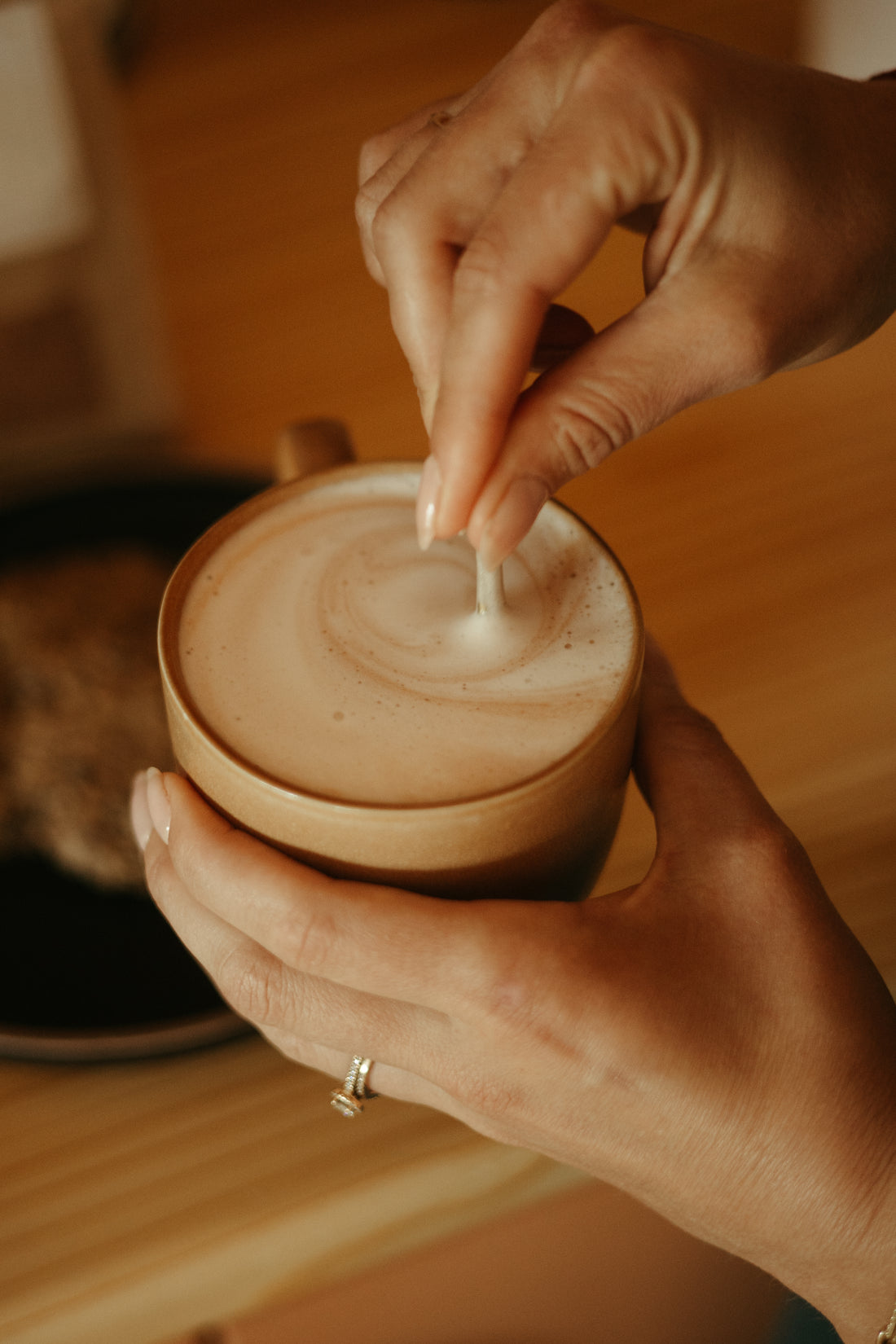
- Drink warm, nutritive liquids like bone broth and meat stock, teas and warm milk (avoid cold drinks and ice) - like our Let It Flow Latte, Golden Moon Milk and Milk Moon Lactation Tea
- Cover the head, neck, lower back and belly when in cold environments
- Practise womb and belly massage with a herbal-infused oil like our Womb Magic Oil, warmed between the hands
- Add nutrient-dense fats to your diet to counterbalance dry vata qualities
- Eat enough good-quality protein, which helps your body produce its own warmth
The care we take in nurturing the postpartum body back to a state of warmth, energy, vitality and nourishment shows itself not only in the weeks after birth, but in subsequent births and down the line of womanhood. This sacred time of internal repair and renewal begins with a simple intention: to keep warm and deeply nourish the new mother.
Gabriella x